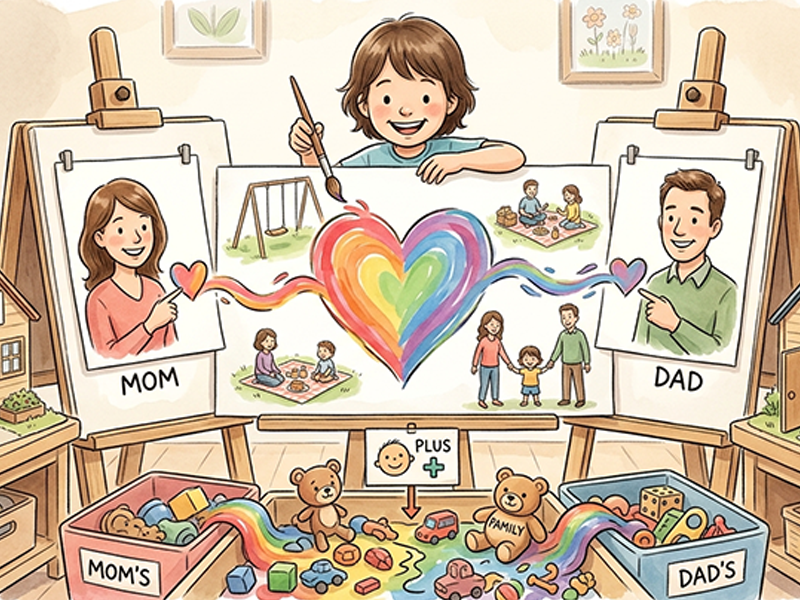
When families separate, children often become the quiet carriers of emotional weight that was never meant for them. They may not say it out loud—but many children feel like they’re being asked to choose.
Choose who they love more.
Choose whose house feels like “home.”
Choose which parent to agree with.
And that’s where the real harm begins.
Because no matter how many homes a child lives in… they still only have one heart.
The Hidden Pressure Children Feel
Children don’t need to be directly told to “pick a side” to feel it.
They feel it when:
- One parent speaks negatively about the other
- They’re asked too many questions about what happens in the other home
- They notice tension, silence, or discomfort when they mention the other parent
- They’re praised for aligning with one parent’s feelings
This creates something called a loyalty conflict—and it can be deeply damaging.
A child starts to believe:
“If I love one parent, I might hurt the other.”
So instead of freely loving both… they begin to split themselves emotionally.
Why Kids Should Never Have to Choose
Children are not responsible for adult relationships.
They didn’t create the conflict.
They don’t have the tools to fix it.
And they should never feel like they have to manage it.
When a child feels forced to choose:
- Anxiety increases
- Emotional expression decreases
- Trust becomes fragile
- Their sense of safety gets shaken
But when a child feels free to love both parents, something powerful happens:
- They feel secure
- They develop healthier emotional regulation
- They build stronger, more stable relationships
They stay whole.
How to Teach Your Child They Don’t Have to Choose
1. Say It Clearly—and Often
Don’t assume they know. Tell them directly:
“You are allowed to love both of us.”
“You don’t have to pick sides.”
“My feelings are not your responsibility.”
These words become emotional anchors your child can return to.
2. Stay Neutral When Talking About the Other Parent
Even when it’s hard.
Your child is half of each parent.
When you criticize the other parent, it can feel like you’re criticizing a part of them.
Instead:
- Keep language neutral
- Focus on your child’s experience, not your opinion
- Avoid emotional reactions in front of them
3. Don’t Use Your Child as a Messenger
This includes:
- “Tell your mom…”
- “Ask your dad why…”
Even small moments like this put your child in the middle.
Use direct communication tools whenever possible.
4. Create Emotional Safety in Your Home
Let your child:
- Talk about the other parent freely
- Share good experiences without guilt
- Miss the other parent without being shut down
If your child says:
“I had fun at mom’s house,”
The response should never feel like a threat to you.
It should feel like:
“I’m glad you had a good time.”
5. Model Emotional Regulation
Children learn more from what you do than what you say.
When you stay calm under pressure, pause before reacting, and respond instead of escalating—you teach them:
“I don’t have to carry adult emotions.”
That’s one of the greatest gifts you can give them.
6. Reinforce the “One Heart” Message
Give your child language they can hold onto:
“No matter how many homes you have… you only have one heart.”
“And no one can take who you love out of your heart.”
This becomes their internal truth—even when the world around them feels divided.
What Co-Parenting Is Really About
Co-parenting isn’t about control.
It isn’t about proving a point.
And it definitely isn’t about winning.
It’s about protecting your child’s emotional well-being—especially when things feel hard.
Because the truth is…
The hardest part isn’t letting go.
It’s making sure your child doesn’t feel like they have to let go of anyone they love.
Final Thoughts
Your child should never feel like love comes with conditions.
They deserve to:
- Love freely
- Feel safe in both homes
- Stay emotionally whole
Even in high-conflict situations, one regulated parent can change everything.
Because no matter how complicated co-parenting becomes…
And no matter how many homes a child lives in…
They still only have one heart.
And it deserves to be protected.